How to Start an NEMT Business in New York
Everything it takes to start a NEMT business in New York: entity setup, your DOT or TLC operating authority, a Letter of Support from MAS, eMedNY Medicaid enrollment, insurance, driver certification, and dispatch software, laid out in the order you'll actually tackle it.
What NEMT providers in New York are working with
about 19.8 million
Residents statewide in New York, the pool of potential facility and private-pay referrals your fleet can reach.
New York Medicaid
New York's Medicaid program. Members eligible for non-emergency transport benefits are routed through it before reaching a broker.
ModivCare, MTM, Access2Care, MAS, and Alivi Health
The Medicaid transportation broker(s) active in New York that assign trips and set per-mile rates for credentialed providers.
9 Steps to Start an NEMT Business in New York
New York runs its Medicaid NEMT program differently than almost every other state. Since August 2023, Medical Answering Services (MAS) has held the exclusive statewide Medicaid Transportation Broker contract, coordinating roughly 15 million trips a year for about 7 million enrollees across all 62 counties. Every provider serving New York Medicaid patients credentials through that same gatekeeper, and here's the part that surprises new operators: eMedNY, the state's Medicaid enrollment system, requires a Letter of Support from MAS as part of your application. You need MAS's sign-off before the state will even process you.
This guide covers the NEMT business requirements New York actually enforces, in the order operators usually work through them: business registration, your DOT or NYC TLC operating authority, insurance and vehicle setup, driver certification, dispatch software, your MAS Letter of Support, and eMedNY enrollment. New York's market also splits sharply: the five boroughs are one of the most saturated NEMT markets in the country, with congestion pricing now affecting Manhattan trip economics too, while upstate counties are a completely different, far less crowded reality.

Form your LLC with the New York Department of State, get an EIN from the IRS, and open a business bank account. Pick up any local business license your city or county requires before you move on.
Apply for a Type 2 (Organization) National Provider Identifier at NPPES.hhs.gov. You'll need it for both your eMedNY enrollment and your MAS credentialing later on.
If you're operating in New York City, a contract carrier permit from the New York State Department of Transportation exempts your ambulette service from needing a separate NYC Taxi and Limousine Commission license. Without that DOT permit, you'll need to get TLC licensed instead, and you'll be treated like a black car livery service under TLC's rules, not a medical transport exemption. Decide which path fits your operation before you register a single vehicle.
Every vehicle needs current New York State registration, a passed inspection, and proof of liability insurance on file. Daily pre-shift vehicle inspections are standard practice for New York NEMT operators and something MAS and Medicaid auditors expect documentation of, not just a one-time inspection sticker.
Ambulette drivers need to qualify under Article 19-A of the New York Vehicle and Traffic Law, on top of a valid New York State driver's license (out-of-state licenses must be exchanged within 30 days of establishing residency). Minimum driver age is 25 statewide, but drops to 19 within New York City. Add PASS (Passenger Assistance Safety and Sensitivity) certification, CPR, First Aid, special needs assistance training, and HIPAA training, which needs to be renewed annually.
Get a HIPAA-compliant dispatch platform running before you approach MAS. It's what receives trip assignments, captures GPS-verified pickup and drop-off times, runs your driver mobile app, and logs the daily pre-shift vehicle inspections and trip documentation MAS reviews more closely than most brokers.
Contact Medical Answering Services directly to start the credentialing conversation. MAS needs to issue a Letter of Support before eMedNY will process your Medicaid provider enrollment, so this step has to happen early, not after you've already submitted your state application.
Submit your Medicaid Transportation Provider Certification through eMedNY with your entity documents, insurance certificates, DOT or TLC authority, and MAS Letter of Support attached. A complete application with the MAS letter already in hand moves noticeably faster than one submitted without it.
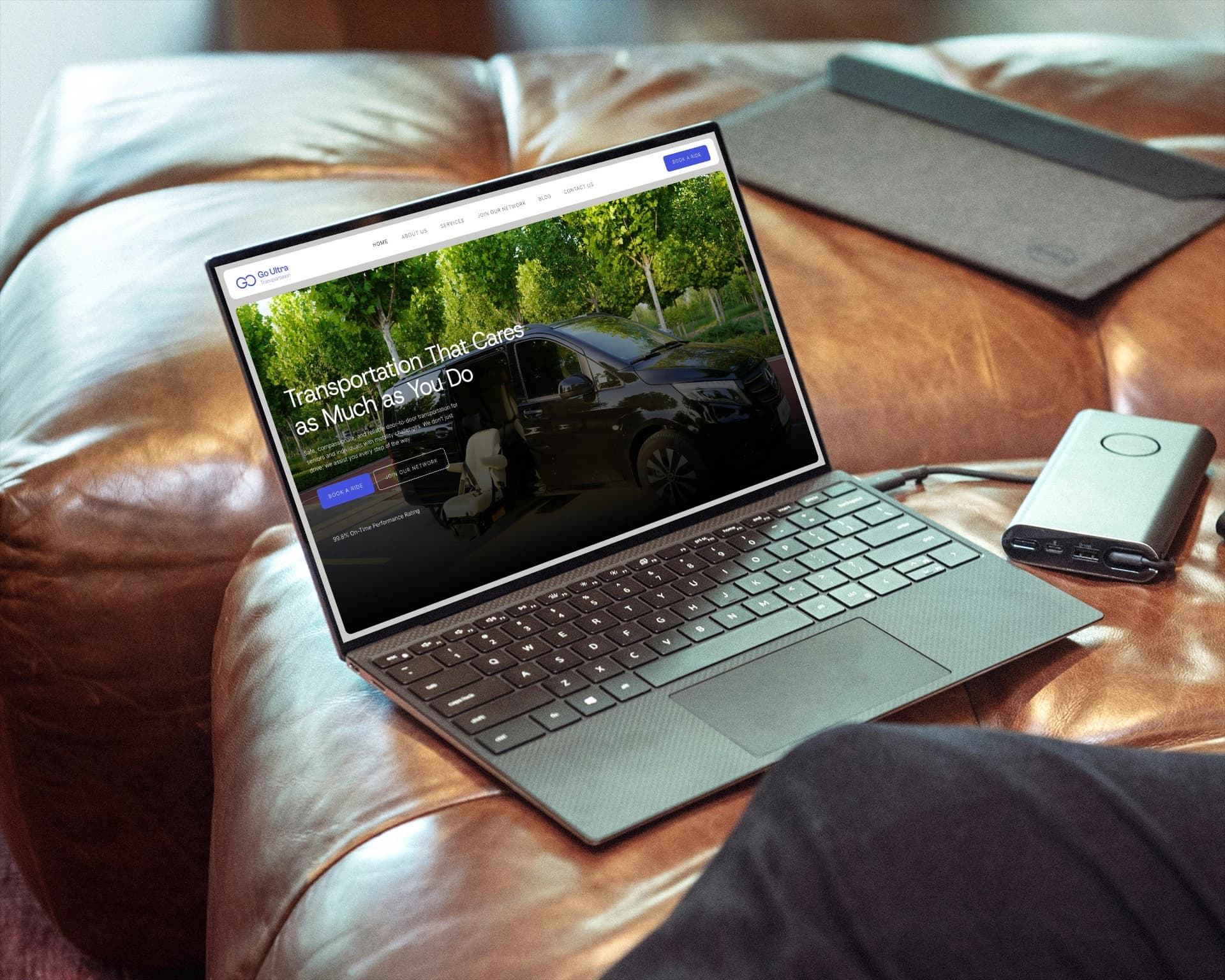
A credentialing-ready website with a borough-specific or upstate county-specific service area page, a fleet showcase, and a trip request form speeds up MAS review and starts pulling in direct facility and private-pay bookings, especially valuable in a market as saturated as New York City's.
The New York NEMT Market in Numbers
What you're working with before you file your first document.
New York residents across the five boroughs and upstate counties that Medicaid NEMT benefits could route to your fleet.
MAS holds the exclusive contract for all 62 counties, unlike the multi-broker systems most other states run.
For roughly 7 million Medicaid enrollees across all ten of the state's regions.
The New York Vehicle and Traffic Law certification every ambulette driver needs, on top of a standard license.
25 years old statewide, but only 19 within New York City specifically.
Business registration through MAS credentialing, when the parallel tracks are run correctly.
Licensing, Vehicles, Software, Brokers & Marketing in New York
New York doesn't run a multi-broker system the way most states do. Since August 2023, Medical Answering Services holds the exclusive statewide Medicaid Transportation Broker contract, coordinating roughly 15 million trips a year for about 7 million enrollees across all 62 counties and all ten of the state's regions. Every provider serving New York Medicaid patients answers to the same gatekeeper.
That structure creates a real dependency most new operators don't expect: eMedNY, the state's Medicaid enrollment system, requires a Letter of Support from MAS as part of a complete provider application. You can't simply enroll with the state and start looking for broker work afterward, MAS's sign-off is a prerequisite to your Medicaid enrollment itself, not a separate step you can leave for later.
Start the MAS conversation as early as you start your entity paperwork. Operators who submit an eMedNY application without the Letter of Support already in hand typically end up waiting on MAS anyway, just later in the process and with less leverage to move things along.
If you're operating anywhere in New York City, you'll hit a fork most other states don't have. A contract carrier permit from the New York State Department of Transportation exempts your ambulette service from needing a separate license from the NYC Taxi and Limousine Commission, a rule in place since January 2016. Without that DOT permit, TLC licensing is mandatory, and you'll be regulated the same way a black car livery service is, with all the oversight that comes with it.
Outside New York City, the DOT operating authority is generally the path you'll take regardless, since TLC's jurisdiction doesn't extend past the five boroughs. Either way, ambulette drivers still need to qualify under Article 19-A of the state's Vehicle and Traffic Law, a requirement that applies on top of whichever operating authority covers your vehicle.
Decide which path fits your operation before you register a vehicle or hire a driver, since the paperwork, inspection standards, and ongoing compliance obligations differ meaningfully between the two.
Every New York NEMT vehicle needs current state registration, a passed inspection, and liability insurance on file, whether you're operating under DOT or TLC authority. Daily pre-shift vehicle inspections are standard expectation here, not a one-time formality, and MAS along with Medicaid auditors can ask to see that documentation.
Exact liability minimums depend on which operating authority you hold and your vehicle type, so confirm the current figure with your insurer and with MAS directly rather than assuming a number from another state applies. Building a relationship with an insurer who already writes NEMT policies in New York saves real time here, since they'll already know which coverage MAS and your operating authority expect.
Ambulette drivers need to qualify under Article 19-A of the New York Vehicle and Traffic Law, a certification most operators outside New York haven't encountered before. Add a valid New York State driver's license, exchanged within 30 days if you're moving from out of state, and a clean driving record confirmed through DMV Motor Vehicle Records, which employers are expected to pull annually, not just at hiring.
Minimum driver age is 25 across most of the state, but drops to 19 specifically within New York City, a distinction that trips up operators building a single statewide hiring policy. Round out every driver file with PASS certification, CPR, First Aid, special needs assistance training, and HIPAA training that gets renewed every year, not just completed once at onboarding.
MAS reviews HIPAA compliance documentation more carefully than most brokers, and New York's expectation of daily pre-shift vehicle inspections means your dispatch system needs to log more than the basics. RouteGenie, MediRoutes, TripSpark, RoutingBox, and Tobi Cloud are all used by New York operators, and what matters most is GPS-verified trip logs, a driver mobile app, and records you can produce quickly if MAS or a Medicaid auditor asks.
Treat this as a monthly cost, not a one-time purchase. Most platforms bill per vehicle or per month, so build it into what you charge per trip from the start, especially since the extra documentation New York expects makes a manual, paper-based system genuinely impractical here.
New York isn't one NEMT market. The five boroughs are among the most saturated NEMT markets in the country, and congestion pricing now adds another layer to Manhattan trip economics that providers there have to account for. Upstate counties are a completely different reality, with far less competition but also far less search volume to capture. Your site needs a service area page built for your actual borough or county, not a generic statewide page. We build broker-ready NEMT websites sized to whichever New York market you actually serve.
Claim and verify your Google Business Profile the same week you register your business. List it under Non-Emergency Medical Transportation Service, set your service area to the specific boroughs, neighborhoods, or upstate counties you cover, and start collecting reviews early. This is what surfaces in the Google Maps local pack when a case manager searches for wheelchair transport in your specific area.
In NYC's saturated boroughs, expect local SEO rankings to take 90 to 150 days given the density of competition. Upstate, meaningful rankings can show up faster simply because fewer providers have built a real local presence. Either way, branding and a working website let you capture private-pay bookings while your DOT, TLC, and MAS approvals are still working through the system.

Ready to launch your New York NEMT business?
We build broker-ready websites and marketing systems for New York NEMT operators from day one, whether you're competing in the five boroughs or building the default option upstate, so you're pulling in private pay and facility bookings while your DOT, TLC, and MAS approvals are still processing.
3 Mistakes That Slow Down New York Operators
The most common, and most avoidable, delays new operators run into.
MAS's sign-off is a prerequisite to Medicaid enrollment, not a follow-up step. Operators who submit to eMedNY without it in hand just end up waiting on MAS anyway, later in the process and with less leverage.
A New York State DOT contract carrier permit exempts NYC ambulette providers from separate TLC licensing. Operators who don't know this rule either skip an authority they actually need or pursue TLC licensing they could have avoided.
Ambulette drivers need Article 19-A qualification, and the minimum driver age is 25 statewide but only 19 in New York City. A single hiring policy built around one number or the other leads to a driver getting rejected during credentialing.
What It Costs and How Long It Takes in New York
LLC formation & NY Department of State filing
$200 – $210
DOT contract carrier permit or NYC TLC license application
$500 – $2,000
Vehicle (used wheelchair van)
$25,000 – $55,000
Commercial auto insurance (annual, per vehicle)
$6,000 – $15,000
Driver certification (Article 19-A, PASS, CPR, HIPAA) per driver
$300 – $700
NEMT dispatch software (monthly, per vehicle)
$100 – $300 / mo
Website and branding
$999 – $3,000
Business registration, EIN, NPI
1 – 2 weeks
DOT operating authority or NYC TLC license
4 – 8 weeks
Vehicle registration, inspection, insurance (parallel)
2 – 4 weeks
Driver hiring and credentialing (parallel)
3 – 6 weeks
MAS Letter of Support
2 – 6 weeks
eMedNY Medicaid enrollment
30 – 90 days
Total, start to first trip
Typically 3 – 6 months
Who Should Start an NEMT Business in New York?
New York's NEMT opportunity looks completely different depending on where you operate, from the five boroughs' saturated competition to upstate counties with far more room to grow.
NYC / Five Borough Operators
Competing in one of the most saturated NEMT markets in the country, now with congestion pricing affecting Manhattan trip economics too. The DOT-vs-TLC decision and the age-19 driver rule are specific to operating here.
Upstate & Rural New York Operators
Facing far less competition and more room to become the default option in your county, though MAS's statewide credentialing standards still apply the same way they do downstate.
Multi-Region Operators
Expanding across MAS's ten regions? Revisit your DOT or TLC authority, insurance, and driver policies for each new area, since requirements like NYC's age minimum can shift depending on where you're adding coverage.
Frequently asked questions
How much does it cost to start an NEMT business in New York?
Do I need a New York NEMT license to start my business?
What is a Letter of Support from MAS, and why do I need one?
Do I need a TLC license if I operate in New York City?
How long does eMedNY Medicaid enrollment take in New York?
Which NEMT broker operates in New York?
What is Article 19-A, and do my drivers need it?
Can I start an NEMT business in New York with one vehicle?
Do I need Google Business Profile and SEO to get NEMT clients in New York?
What NEMT dispatch software do I need in New York?
NEMT Marketing Resources
Deep dives into the strategies that help medical transport providers scale.
Article
Learn the exact strategy we use to help NEMT providers dominate local search and stop relying on broker volume.
Article
Digital credentialing is getting harder. Here is the checklist you need to pass MTM and Modivcare verification.
Article
We break down why shifting just 20% of your volume to private pay can double your net profit and improve your margins.