NEMT Business Startup Checklist
44 items across 7 categories. Check off each step as you complete it. Your progress saves automatically so you can return any time.
0 of 43 items complete
Progress saves automatically in your browser.
Business Formation
Legal entity and financial setup
Register your LLC or Corporation with the state
File with your Secretary of State office. Most NEMT operators use an LLC for liability protection. Costs $50 to $500 depending on state.
Obtain your Employer Identification Number (EIN) from the IRS
Free at IRS.gov. Takes 5 minutes online. You need this before opening a business bank account or hiring drivers.
Open a dedicated business checking account
Never mix personal and business funds. Brokers pay via ACH, so you need a business account set up before you receive your first payment.
Set up accounting software to track revenue and expenses
QuickBooks or Wave (free) work well for new operators. Track every trip's revenue against its cost from day one.
State Licensing and Permits
Requirements vary by state — verify with your state Medicaid agency
Research your state's specific NEMT licensing requirements
Contact your state Medicaid agency directly. Some states require a NEMT certificate of authority; others only require a standard business license.
Apply for a Type 2 Organization NPI at NPPES.hhs.gov
Free to apply. Takes 1 to 2 weeks to process. Every NEMT business needs a Type 2 organization NPI to bill Medicaid brokers.
Obtain a local business license from your city or county
Check your city hall or county clerk. Some jurisdictions require a transportation or livery permit on top of the state license.
Register with your state Medicaid agency as a transportation provider
Required in most states before you can receive Medicaid-funded trips. The application process takes 30 to 90 days.
Obtain a USDOT number if you will cross state lines
Register free at FMCSA.dot.gov. Not required for intrastate operations in most states, but always verify your state's rules.
Vehicle Requirements
Each vehicle type has its own compliance requirements
Purchase or lease qualifying vehicles for your trip types
Ambulatory: sedan or minivan. WAV: ADA-accessible van with lift or ramp. Stretcher: custom cargo van conversion. Match your fleet to your target market.
Pass your state's commercial vehicle safety inspection
Most states require annual inspections. WAV vehicles often need additional accessibility equipment inspections beyond the standard vehicle check.
Install wheelchair securement systems in all WAV vehicles
Q'Straint or Sure-Lok are the industry standards. Must meet ADA requirements. Costs $500 to $1,500 per vehicle installed by a certified technician.
Install GPS tracking on every vehicle in your fleet
Required by most brokers including Modivcare and MTM. Samsara, Verizon Connect, and Azuga are commonly used. Budget $20 to $50 per vehicle per month.
Install a first aid kit and fire extinguisher in each vehicle
Required by most state regulations and broker contracts. Check your state's requirements for kit contents and fire extinguisher rating.
Register all vehicles as commercial and obtain titles
NEMT vehicles must carry commercial registration in most states. Personal vehicle registration is not sufficient for commercial passenger transport.
Insurance Requirements
These are industry minimums — some brokers require higher limits
Obtain commercial auto liability at $1M minimum per occurrence
Most brokers require $1M per occurrence and $3M aggregate. Personal auto insurance does not cover commercial transport. Expect $3,000 to $8,000 per vehicle per year.
Obtain general liability insurance at $1M per occurrence, $2M aggregate
Covers slip-and-fall incidents and non-vehicle claims. Often bundled with commercial auto for a discount.
Obtain workers' compensation insurance before hiring your first driver
Mandatory in most states once you have employees. Protects you if a driver is injured on the job. Rates vary significantly by state.
Obtain an ACORD 25 certificate of insurance from your agent
This is the standard proof-of-insurance form brokers require during credentialing. Ask your agent to add your primary broker as an additional insured before you submit.
Add each broker as an additional insured on your commercial auto policy
Modivcare, MTM, and Veyo all require this before activating your provider account. Your agent adds the endorsement at no cost or a small annual fee.
Driver Compliance
Every driver must complete these before their first trip
Verify a valid driver's license for every driver
Most NEMT trips require a standard Class C license. Some states require a chauffeur or medical transport endorsement. Check with your state DMV.
Complete a criminal background check on every driver
Most brokers require both a state and federal FBI background check through an approved vendor. Results must show no disqualifying convictions.
Conduct pre-employment drug testing and set up a random testing program
Use a certified testing facility. Create a written drug and alcohol policy and document every test result. Brokers will ask for this during credentialing.
Certify all drivers in CPR and First Aid
American Red Cross or American Heart Association certification is accepted by most brokers. Costs $40 to $80 per driver. Valid for 2 years.
Complete defensive driving certification for every driver
The NSC Defensive Driving Course is widely accepted by brokers. Available online for $25 to $50 per driver.
Complete Passenger Assistance Training (PAT) for all drivers
Covers safe loading, unloading, and securement of wheelchair and stretcher patients. CTAA and local transit agencies offer certified courses.
Complete HIPAA training for all drivers and dispatch staff
Everyone who handles patient information must be trained annually. Online courses cost $20 to $50 per person. Document every training session.
Broker Credentialing
Required to get activated with Modivcare, MTM, Veyo, and other brokers
Create a provider account on each broker's credentialing portal
Modivcare, MTM, and Veyo have separate portals. Apply to all brokers active in your state. Find them through your state Medicaid agency's provider directory.
Submit your completed W-9 using your EIN
Download Form W-9 from IRS.gov. Use your EIN, not your SSN, for business submissions. Brokers need this to set up ACH payments.
Submit your NPI confirmation letter
Download your NPI letter from NPPES.hhs.gov after approval. Brokers use it to verify your provider status in the NPI registry.
Submit your ACORD 25 with the broker listed as additional insured
Confirm the broker's full legal entity name appears on the certificate before you submit. A wrong or missing name is the most common reason credentialing gets delayed.
Submit vehicle registration and inspection certificates for every vehicle
Most brokers require current registration for each vehicle. Some also require the inspection certificate or a vehicle photo.
Submit a complete driver file for every driver in your fleet
Each file needs: driver's license, background check results, drug test results, CPR card, and defensive driving certificate.
Submit your rate card documenting pricing for each vehicle type
Your rate card shows brokers what you charge per trip, per mile, and for add-ons like wait time and stair assists.
Build your rate cardReview and sign the provider agreement
Read the full contract. Key terms to check: rate schedule, payment timeline, performance requirements, and termination notice period.
Set up ACH direct deposit for broker payments
Provide your business account and routing numbers. Most brokers pay weekly or bi-weekly. Payments typically arrive 7 to 14 days after trip completion.
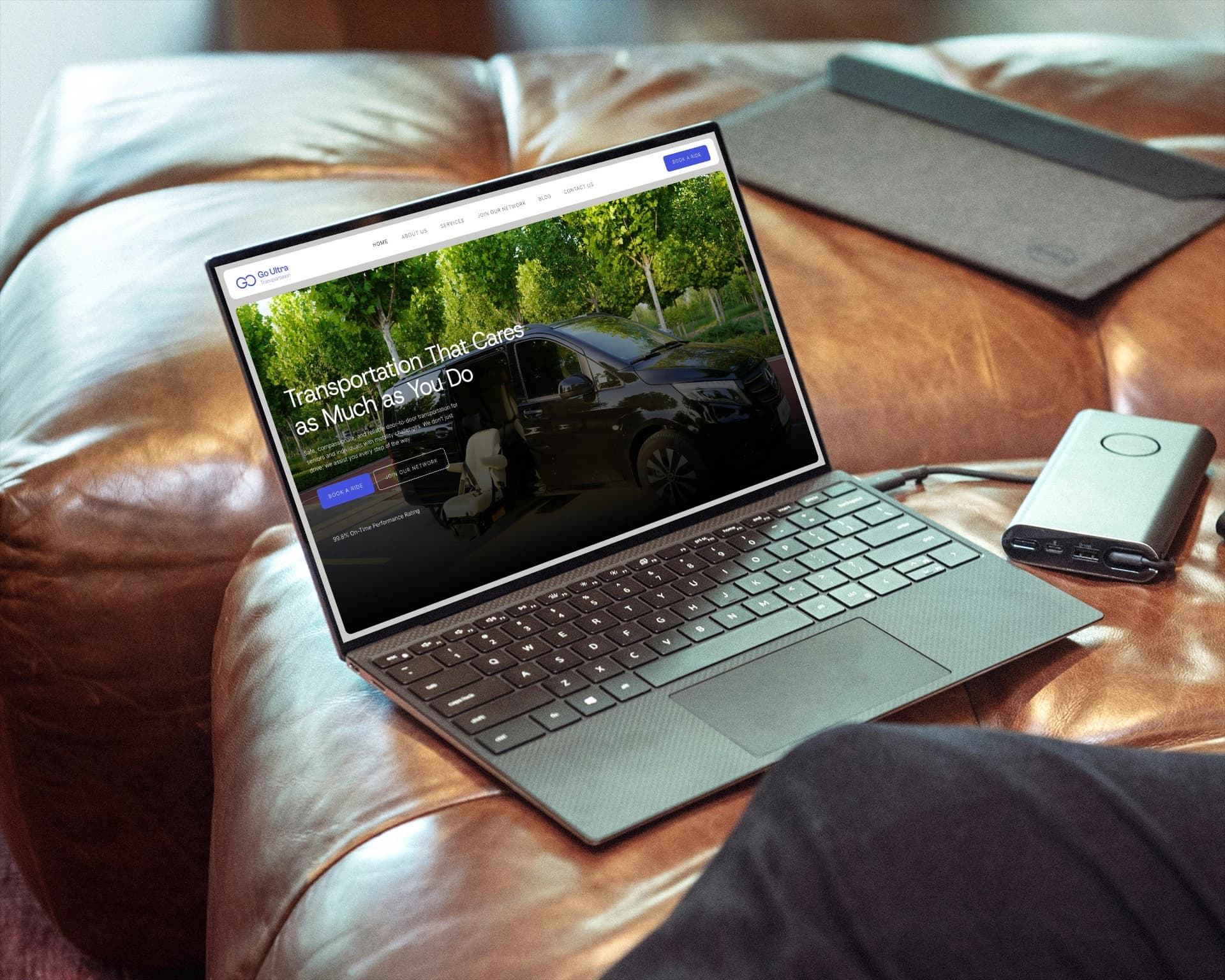
Launch a broker-ready NEMT website before submitting your application
Many brokers verify your online presence during credentialing. Your site must include service area, fleet details, insurance info, and a trip request form.
Build your NEMT websiteOperations Setup
Have these systems running before your first trip
Set up NEMT dispatch software
RouteGenie, RoutingBox, and MediRoutes are the most widely used. Most include driver apps, scheduling, and broker EDI integration. Budget $100 to $400 per month.
Set up HIPAA-compliant communication for dispatching drivers
Never send patient trip details over personal SMS or Gmail. Use a dispatch platform with a HIPAA-compliant driver app or a covered messaging service.
Set up invoicing and billing for private pay clients
Broker trips bill through their portal. For private pay, use QuickBooks or a NEMT billing platform. Set net-14 or net-30 payment terms in your contracts.
Create a written no-show and cancellation policy
Brokers have specific no-show codes and rules. For private pay clients, include a cancellation fee clause in your Master Service Agreement.
Publish a patient privacy policy on your website
Required under HIPAA. Describes how you handle patient information. A healthcare attorney can draft one for $200 to $500.
Sign Business Associate Agreements with all software vendors
Any platform that stores or processes patient data must sign a BAA with you. Most HIPAA-compliant vendors offer this on request.
Download your checklist as a PDF
Share it with your attorney, business partner, or team.
How Long Does It Take to Start an NEMT Business?
Most new NEMT operators take 60 to 120 days from business registration to their first completed trip. The longest steps are state licensing (30 to 90 days in most states) and broker credentialing (2 to 6 weeks per broker). Everything else — vehicle setup, driver compliance, and insurance — can run in parallel while you wait for those approvals.
Operators who submit complete credentialing packages on the first attempt typically get activated 2 to 3 weeks faster than those who go back and forth with brokers over missing documents. Use this checklist to build a complete file before you submit anything.
State Licensing: What Most New Operators Miss
Your state licensing requirements depend entirely on your state Medicaid agency, not federal rules. In some states like Florida, Texas, and California, you need a separate NEMT operating certificate before you can contract with any broker. In others, a standard LLC registration and NPI number are sufficient to begin credentialing.
The NPI (National Provider Identifier) is the step most new operators underestimate. You need a Type 2 Organization NPI, not a Type 1 Individual NPI. Apply at NPPES.hhs.gov as soon as your LLC is registered. Processing takes 1 to 2 weeks and nothing moves until you have it.
Insurance: The Most Common Credentialing Bottleneck
Insurance issues delay more NEMT credentialing applications than any other single factor. The two most common problems: the broker is not listed as an additional insured on the ACORD 25, or the coverage limits are below what the broker requires.
Most Medicaid brokers require $1M per occurrence and $3M aggregate for commercial auto liability. Some require $2M per occurrence. Get the exact requirements from each broker's credentialing portal before you purchase your policy, not after. Changing coverage limits mid-policy can trigger a cancellation and restart your credentialing clock.
For a single-vehicle ambulatory fleet, commercial auto insurance typically costs $3,000 to $5,000 per year. Wheelchair van insurance runs $5,000 to $9,000 per vehicle annually. BLS ambulance coverage starts at $8,000 per unit. Get quotes from three carriers before binding.
Broker Credentialing: How to Get Approved Faster
Modivcare, MTM, and Veyo each run their own credentialing process. Apply to all brokers active in your state at the same time, not one at a time. Each approval unlocks a separate pool of trips and having more than one broker relationship protects you if one reduces their trip volume.
The documents that delay credentialing most often are driver files. Each driver needs a complete package: license copy, background check results, drug test results, CPR card, and defensive driving certificate. Some brokers also ask for a passenger assistance training certificate. Build this file for every driver before you submit your application so you can respond to any broker request within 24 hours.
Your rate card is the other document brokers use to categorize your fleet. Submit a clean, formatted PDF rate card that clearly lists your base rate, per-mile rate, and add-on fees for each vehicle type. Use the NEMT Rate Card Generator to build one in minutes.
HIPAA Compliance for NEMT Operators
Every NEMT business is a HIPAA Business Associate the moment it receives patient names, addresses, or Medicaid ID numbers from a broker or facility. This includes every trip your dispatcher assigns and every manifest your driver receives.
The three most common HIPAA violations in NEMT operations: drivers receiving trip details via personal SMS, dispatchers sending manifests to personal Gmail accounts, and printed manifests left visible in vehicles. All three are federal violations. Address all three before your first trip by using a HIPAA-compliant dispatch platform with a driver app.
Frequently Asked Questions
How much does it cost to start an NEMT business?
Startup costs for a single-vehicle ambulatory operation typically run $15,000 to $30,000. The largest expenses are the vehicle ($8,000 to $20,000 used), commercial insurance ($3,000 to $6,000 for the first year), LLC formation and licensing ($200 to $1,500 depending on state), GPS tracking setup ($500 to $800), and driver certifications ($300 to $600 per driver). A wheelchair van operation starts higher because the vehicle costs $25,000 to $55,000 and the insurance premiums are larger.
Do I need a CDL to drive an NEMT vehicle?
In most states, a standard Class C license is sufficient for ambulatory and wheelchair van transport. A CDL is typically not required unless the vehicle has a gross vehicle weight rating over 26,000 lbs or carries 16 or more passengers. Check your specific state's requirements before hiring drivers, as a few states have additional endorsement requirements for medical transport.
Which brokers should I apply to first?
Apply to all brokers active in your state at the same time. Modivcare and MTM are the two largest national brokers and operate in most states. Veyo is strong in several western states. Your state Medicaid agency's website lists all contracted brokers for your state. Do not wait for one broker approval before starting the next application — the processes are independent and parallel applications save weeks.
How long does broker credentialing take?
Most broker credentialing takes 2 to 6 weeks from initial application to account activation, assuming your documentation is complete on the first submission. Missing or incorrect documents restart sections of the review process. Operators who submit a complete package with all driver files, insurance certificates, and vehicle documents in the first upload typically get approved in the shorter end of that range.
Can I start with just one vehicle?
Yes. Many successful NEMT operators start with a single ambulatory vehicle and add fleet vehicles as revenue grows. One vehicle can complete 6 to 10 broker trips per day depending on your area and route density, generating $120 to $250 in gross revenue daily. That covers your costs and gives you operating cash flow to fund a second vehicle within 6 to 12 months.
Do I need a website to get broker credentialing?
Most brokers do not formally require a website, but many now check for an online presence as part of their verification process. Operators without a website or with an incomplete site are more likely to face additional document requests. More importantly, a website is your primary tool for attracting private pay clients — hospitals, dialysis centers, and nursing homes that pay 40 to 70 percent more per trip than broker rates.