How to Start an NEMT Business in Georgia
Everything it takes to start a NEMT business in Georgia: entity setup, DCH Medicaid enrollment, credentialing with Verida, insurance, driver certification, and dispatch software, laid out in the order you'll actually tackle it.
What NEMT providers in Georgia are working with
about 11.2 million
Residents statewide in Georgia, the pool of potential facility and private-pay referrals your fleet can reach.
Georgia Medicaid
Georgia's Medicaid program. Members eligible for non-emergency transport benefits are routed through it before reaching a broker.
ModivCare, MTM, Access2Care, Verida, and Alivi Health
The Medicaid transportation broker(s) active in Georgia that assign trips and set per-mile rates for credentialed providers.
9 Steps to Start an NEMT Business in Georgia
Georgia's NEMT landscape changed in a big way on April 1, 2026. Verida, formerly Southeastrans and already headquartered in Atlanta, became the sole statewide Medicaid NEMT broker across all five of Georgia's regions, North, Atlanta, Central, East, and Southwest. If you're reading older guides that talk about applying to five competing brokers, that structure is gone. Every provider serving Georgia Medicaid NEMT now credentials through Verida, on top of enrolling directly with the Georgia Department of Community Health (DCH).
This guide covers the NEMT business requirements Georgia actually enforces, in the order operators usually work through them: business registration, insurance, vehicle and driver setup, dispatch software, DCH enrollment, and Verida credentialing. Georgia still has real regional variety even with one statewide broker, metro Atlanta's traffic and density are worlds apart from rural South Georgia's agricultural counties, and we'll flag where that split still matters.

File Articles of Organization with the Georgia Secretary of State to form your LLC, get an EIN from the IRS, and pick up a business license from your county, required in most Georgia counties.
Apply for a Type 2 (Organization) National Provider Identifier at NPPES.hhs.gov. You'll need it for both your DCH enrollment and your Verida credentialing later on.
Secure at least $1,000,000 in commercial auto liability coverage, the figure Georgia Medicaid enrollment expects. Add general liability and workers' compensation once you have employee drivers, and confirm whether Verida's own credentialing standard asks for anything above the state floor.
Register and inspect your vehicles to Georgia's safety standards, with ADA compliance for any wheelchair-accessible unit. Decide upfront whether you're building an ambulatory, wheelchair, or stretcher fleet, since that choice affects your vehicle documentation requirements.
Georgia drivers typically need to be at least 21 (Verida and most brokers prefer 25 or older), hold a valid state-issued Chauffeur, Class D, or CDL license, and pass a criminal background check, MVR review, and drug screen. Add CPR/First Aid certification before a driver can be assigned trips.
Get a HIPAA-compliant dispatch platform running before you approach DCH or Verida. It's what receives trip assignments, captures GPS-verified pickup and drop-off times, runs your driver mobile app, and keeps the trip documentation both DCH and Verida can ask to review.
Submit your provider enrollment through the DCH provider enrollment portal at mmis.georgia.gov, selecting transportation/non-emergency medical transportation as your provider type. Include your W-9, business license, proof of insurance, vehicle documentation, and driver roster with credentialing documents, and pass OIG and Georgia Medicaid exclusion database screening to receive your Georgia Medicaid Provider Number.
Once your DCH enrollment clears, contact Verida to begin credentialing. Since Verida is now the sole statewide broker for all five Georgia regions, this is the only broker relationship you need to build, a simpler path than the multi-broker credentialing most other states require, but also one with no alternative if the relationship stalls.
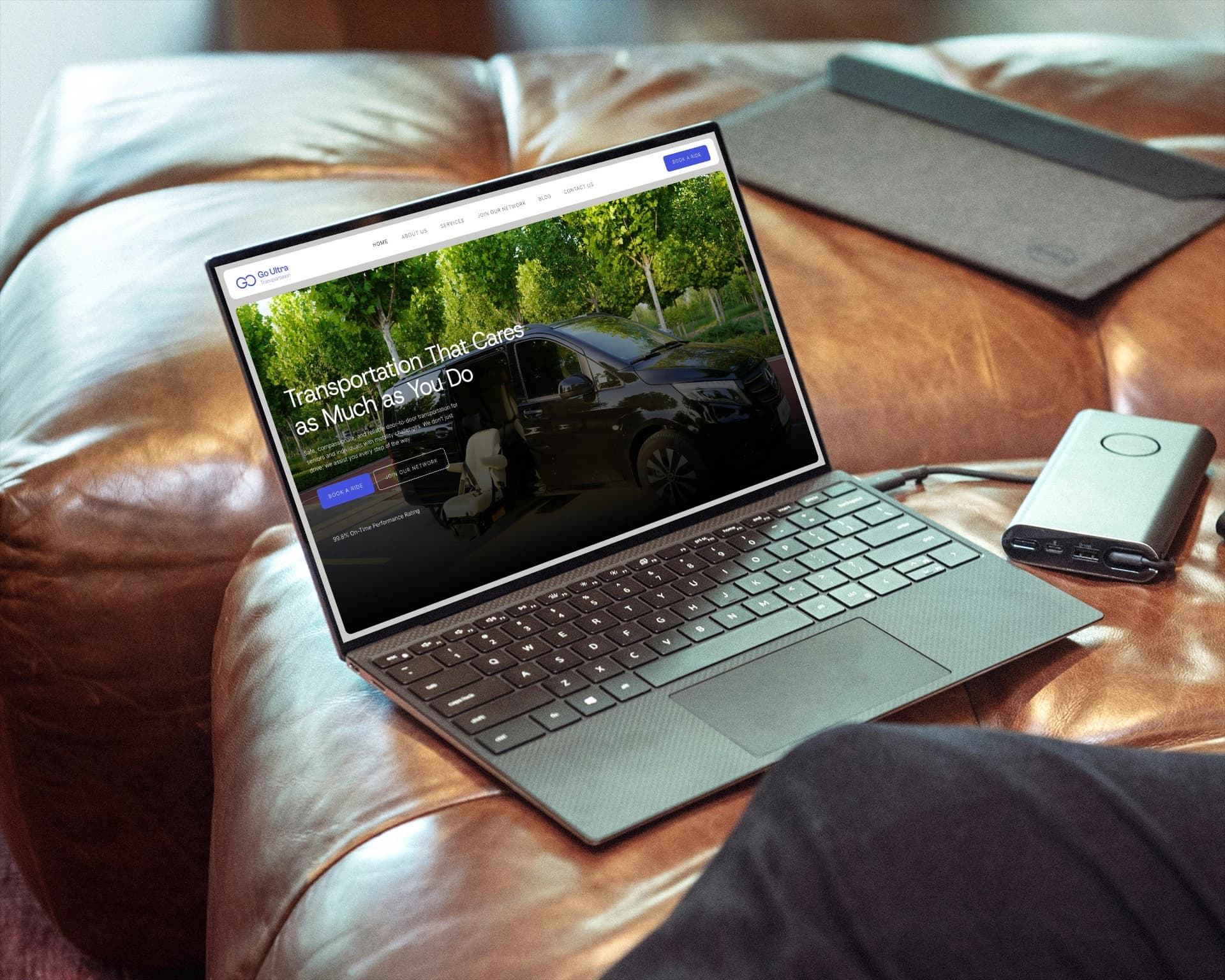
A credentialing-ready website with a service area page for your actual region, metro Atlanta or rural South Georgia, speeds up Verida approval and starts pulling in direct facility and private-pay bookings from day one.
The Georgia NEMT Market in Numbers
What you're working with before you file your first document.
Georgia residents across metro Atlanta and rural counties that Medicaid NEMT benefits could route to your fleet.
Verida became the sole statewide broker across all five Georgia regions effective April 1, 2026.
North, Atlanta, Central, East, and Southwest, all now coordinated through the same Verida relationship.
Minimum coverage Georgia Medicaid enrollment expects before you can be credentialed.
State minimum is 21, but Verida and most brokers prefer drivers 25 or older in practice.
Business registration through Verida credentialing, when the parallel tracks are run correctly.
Licensing, Vehicles, Software, Brokers & Marketing in Georgia
Effective April 1, 2026, Verida, formerly Southeastrans, became the exclusive statewide Medicaid NEMT broker for all five of Georgia's regions: North, Atlanta, Central, East, and Southwest. Georgia used to run one of the most competitive multi-broker fields in the country, with ModivCare, MTM, Access2Care, Verida, and Alivi Health all active. That structure is gone for Medicaid NEMT. Every provider now credentials through Verida.
This changes the math for new operators in a real way. Instead of spreading credentialing effort across several brokers to build a buffer against any one relationship slowing down, Georgia providers now have one relationship that matters for Medicaid volume. Get your DCH enrollment and your Verida application right the first time, since there's no second broker to fall back on if something stalls.
Verida being headquartered in Atlanta isn't a coincidence for the state's broker structure, but it does mean their credentialing team knows the Georgia market closely. Build your application with Georgia-specific documentation, not a generic multi-state credentialing packet, since Verida reviews Georgia providers against Georgia's own standards.
Georgia's Department of Community Health handles Medicaid provider enrollment through its portal at mmis.georgia.gov. Select transportation or non-emergency medical transportation as your provider type, and submit your W-9, business license, proof of insurance, and vehicle documentation alongside your application.
Your driver roster needs credentialing documentation attached for every driver, not just a name list. DCH also runs OIG and Georgia Medicaid exclusion database screening as part of enrollment, confirming none of your owners, drivers, or key staff are excluded from participating in federal healthcare programs. Clear that screening and you receive your Georgia Medicaid Provider Number.
Georgia Medicaid enrollment expects a $1,000,000 commercial auto liability policy. Add general liability and workers' compensation once you bring on employee drivers, and confirm with Verida whether their own credentialing standard sets anything above this state figure before you finalize a policy.
Vehicles need current registration and a passed safety inspection, with ADA compliance for wheelchair-accessible units. Decide on your fleet type, ambulatory, wheelchair, or stretcher, early, since it shapes both your vehicle documentation and your driver certification requirements.
Georgia drivers typically need to be at least 21, though Verida and most brokers prefer 25 or older in practice. Every driver needs a valid state-issued Chauffeur license, Class D license, or CDL depending on the vehicle, plus a criminal background check, motor vehicle record review, and drug screen before they can be added to a driver file.
Add current CPR/First Aid certification on top of the state minimum, since Verida's credentialing process expects it as standard. Build a complete file for every driver before you submit to Verida, since incomplete documentation is the most common reason a driver gets held out of the trip rotation.
A dispatch platform built for NEMT handles the basics everywhere: receiving trip assignments, capturing GPS-verified pickup and drop-off times, and running a driver mobile app. In Georgia, with a single statewide broker now handling all Medicaid NEMT volume, keeping clean, complete trip documentation matters even more, since there's no alternate broker relationship to fall back on if a dispute over trip records damages your standing with Verida.
RouteGenie, MediRoutes, TripSpark, and RoutingBox are common choices among Georgia operators. Treat it as a monthly cost, not a one-time purchase, and build it into what you charge per trip from the start.
Metro Atlanta's traffic and population density create a genuinely different operating environment than rural South Georgia's agricultural counties, even though both now route Medicaid NEMT through the same broker. Your site needs a service area page for your actual region, not a generic statewide page. We build broker-ready NEMT websites sized to whichever Georgia market you actually serve.
Claim and verify your Google Business Profile the same week you register your business. List it under Non-Emergency Medical Transportation Service, set your service area to the specific counties you cover, and start collecting reviews early.
In metro Atlanta, expect local SEO rankings to take 90 to 150 days given the competition. In rural South Georgia, meaningful rankings often show up faster since fewer providers have built a real online presence. Either way, branding and a working website let you capture private-pay bookings while your DCH and Verida applications are still working through the system.

Ready to launch your Georgia NEMT business?
We build broker-ready websites and marketing systems for Georgia NEMT operators from day one, whether you're in metro Atlanta or rural South Georgia, so you're pulling in private pay and facility bookings while your DCH and Verida applications are still processing.
3 Mistakes That Slow Down Georgia Operators
The most common, and most avoidable, delays new operators run into.
Guides written before April 2026 describe applying to ModivCare, MTM, Access2Care, Verida, and Alivi Health separately. That structure no longer exists for Medicaid NEMT. Verida is now the sole statewide broker, and time spent chasing the old multi-broker approach is time wasted.
Verida reviews Georgia providers against Georgia's own documentation standards, not a national template. A credentialing packet built for a different state's broker often misses fields Verida specifically expects.
With no second statewide broker to fall back on, a stalled or damaged Verida relationship has no workaround the way it might in a multi-broker state. Get your documentation complete and your trip records clean from day one.
What It Costs and How Long It Takes in Georgia
LLC formation & GA Secretary of State filing
$100
County business license
$50 – $200
Vehicle (used wheelchair van)
$25,000 – $55,000
Commercial auto insurance, annual ($1M minimum)
$6,000 – $12,000
General liability & workers' comp (annual)
$1,500 – $4,000
Driver background check, CPR/First Aid per driver
$300 – $600
NEMT dispatch software (monthly, per vehicle)
$100 – $300 / mo
Website and branding
$999 – $3,000
Business registration, EIN, NPI
1 – 2 weeks
Insurance binding, vehicle setup (parallel)
2 – 4 weeks
Driver hiring and credentialing (parallel)
2 – 5 weeks
DCH Medicaid enrollment
30 – 60 days
Verida credentialing
4 – 10 weeks
Total, start to first trip
Typically 3 – 6 months
Who Should Start an NEMT Business in Georgia?
Georgia's NEMT opportunity looks different by region even with a single statewide broker, from metro Atlanta's density to rural South Georgia's agricultural counties.
Metro Atlanta Operators
Competing in Georgia's densest, most traffic-heavy market for both Verida trip volume and search visibility. A fast, complete credentialing package and a real local SEO presence matter most here.
Central & Coastal Georgia Operators
Serving Georgia's mid-sized metros and coastal communities with real facility demand and less competition than Atlanta. A service area page built for your specific region outperforms a generic statewide page.
Rural South Georgia Operators
Serving agricultural counties with real access gaps and far less competition. A provider who builds a real online presence here can become the default option quickly.
Frequently asked questions
How much does it cost to start an NEMT business in Georgia?
Do I need a Georgia NEMT license to start my business?
Is Verida really the only NEMT broker in Georgia now?
How do I enroll as an NEMT provider with Georgia Medicaid?
What insurance does Georgia require for NEMT vehicles?
What age do NEMT drivers need to be in Georgia?
Can I start an NEMT business in Georgia with one vehicle?
Do I need Google Business Profile and SEO to get NEMT clients in Georgia?
What NEMT dispatch software do I need in Georgia?
NEMT Marketing Resources
Deep dives into the strategies that help medical transport providers scale.
Article
Learn the exact strategy we use to help NEMT providers dominate local search and stop relying on broker volume.
Article
Digital credentialing is getting harder. Here is the checklist you need to pass MTM and Modivcare verification.
Article
We break down why shifting just 20% of your volume to private pay can double your net profit and improve your margins.