How to Start an NEMT Business in Florida
Everything it takes to start a NEMT business in Florida: entity setup, AHCA Medicaid certification, your county's COPCN, insurance, Level 2 background screening, dispatch software, and broker credentialing, laid out in the order you'll actually tackle it.
What NEMT providers in Florida are working with
about 22.9 million
Residents statewide in Florida, the pool of potential facility and private-pay referrals your fleet can reach.
Florida Medicaid (Statewide Medicaid Managed Care)
Florida's Medicaid program. Members eligible for non-emergency transport benefits are routed through it before reaching a broker.
ModivCare, MTM, Access2Care, and Alivi Health
The Medicaid transportation broker(s) active in Florida that assign trips and set per-mile rates for credentialed providers.
9 Steps to Start an NEMT Business in Florida
Florida's NEMT licensing runs on two levels most new operators don't expect. Statewide, the Agency for Health Care Administration (AHCA) handles Medicaid enrollment, and that part is free and usually done in 30 to 60 days. Layer on top of that whatever your specific county requires, and in a lot of Florida counties that means a Certificate of Public Convenience and Necessity, or COPCN, sometimes with a public hearing in front of the county commission before you're approved. Miami-Dade's process alone can run 3 to 6 months on the COPCN step by itself, separate from your AHCA timeline.
This guide covers the NEMT business requirements Florida actually enforces, in the order operators usually work through them: business registration, your county's COPCN, insurance, vehicle setup, driver screening, dispatch software, and AHCA enrollment. Florida also has the country's highest share of residents 65 and older, a snowbird population that swells the market by up to 1.5 million people every winter, and a real hurricane season in the Panhandle and Gulf Coast, all of which shape how you plan your fleet and your marketing.

File your LLC through the Florida Division of Corporations (Sunbiz), get an EIN from the IRS, and pick up any local business license the Florida Department of Business and Professional Regulation or your county requires.
Apply for a Type 2 (Organization) National Provider Identifier at NPPES.hhs.gov. You'll need it for both your AHCA enrollment and your broker applications later on.
Call your county's transportation or consumer protection division before you assume AHCA enrollment alone lets you operate. Miami-Dade requires a Non-Emergency COPCN through the Board of County Commissioners with a public hearing and a background check covering both financial and criminal history, a process that can take 3 to 6 months on its own. Broward's Consumer Protection Division processes either a COPCN or a separate Nonemergency Medical Transportation Service (NEMTS) license. Requirements vary widely by county, so confirm yours before you buy a vehicle or bind insurance.
Florida commercial auto liability commonly starts around $300,000, but county minimums range anywhere from $100,000 to $1,000,000 depending on where you operate. Add general liability and specialized loading and unloading liability coverage, which several Florida counties specifically require for wheelchair and stretcher transport.
Vehicles need to be purposefully equipped for wheelchair or stretcher transport, with ADA-compliant ramps built to a 1:12 slope ratio and rated to support at least 600 pounds. Most counties also expect newer vehicles, typically just a few years old, and a current safety inspection.
Florida NEMT drivers need to be at least 21, hold a valid Florida driver's license and for-hire chauffeur registration, and pass Level 2 AHCA background screening, a fingerprint-based check through the Florida Department of Law Enforcement, not a standard name-based background check. Add CPR/First Aid and passenger assistance training on top of that.
Get a HIPAA-compliant dispatch platform running before you approach AHCA or any broker. It's what receives trip assignments, captures GPS-verified pickup and drop-off times, runs your driver mobile app, and helps you manage capacity when Florida's snowbird season pushes demand up by as much as 1.5 million people between October and April.
Submit your Medicaid provider enrollment to AHCA, it's free and typically takes 30 to 60 days for a complete application. Once you're enrolled, apply to ModivCare, MTM, Access2Care, and Alivi Health at the same time rather than waiting on one approval before starting the next.
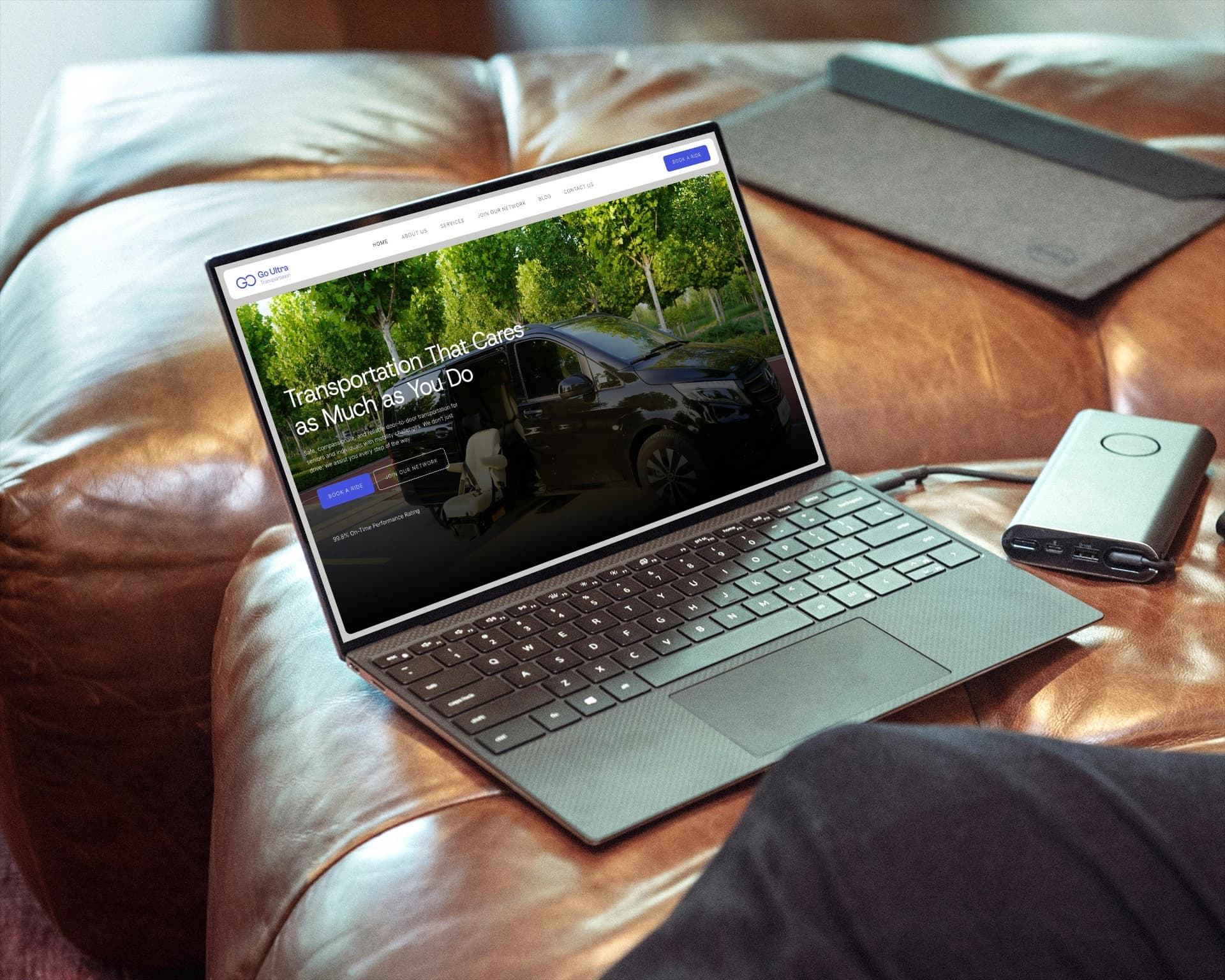
A credentialing-ready website with a service area page for your specific county, a fleet showcase, and a trip request form speeds up broker approval and starts pulling in direct facility and private-pay bookings, especially valuable heading into snowbird season when demand spikes fast.
The Florida NEMT Market in Numbers
What you're working with before you file your first document.
Florida residents, with the highest share of residents 65 and older of any state, that Medicaid NEMT benefits could route to your fleet.
Estimated part-time resident increase between October and April, much of it elderly and needing recurring medical transport.
Statewide AHCA Medicaid enrollment plus whatever COPCN or local certificate your specific county requires.
Florida commercial auto liability minimums vary this widely depending on where you operate.
Typical processing time for a complete Medicaid provider application, and it's free.
Wider range than most states, since a county COPCN with a public hearing can add several months on its own.
Licensing, Vehicles, Software, Brokers & Marketing in Florida
AHCA handles the statewide half of Florida's NEMT licensing. Enroll as a Medicaid provider, and if your application is complete, expect approval in 30 to 60 days at no cost. That's the easy part, and it's also the part most guides stop at.
The half that catches new operators off guard is county-level. A lot of Florida counties require their own Certificate of Public Convenience and Necessity before you can legally operate at all, on top of AHCA. Miami-Dade's version goes through the Board of County Commissioners, includes a public hearing, and involves a background check covering both financial and criminal history, a process that alone can run 3 to 6 months. Broward's Consumer Protection Division offers either a COPCN or a separate Nonemergency Medical Transportation Service license, a different name for a similar approval.
Not every Florida county runs it the same way, and some have lighter requirements than Miami-Dade or Broward. Call your specific county's transportation or business licensing office early, since this step, not AHCA, is usually what determines your real timeline to your first trip.
Florida expects NEMT vehicles to be purposefully built or modified for wheelchair or stretcher transport, not a personal van with a ramp bolted on. ADA-compliant ramps need to meet a 1:12 slope ratio and support at least 600 pounds, and most counties expect vehicles that are relatively new, typically no more than a few years old.
Vehicles also need to pass Florida's required safety inspections and carry the equipment your county's COPCN process asks for, which can differ from what AHCA alone requires. Confirm your county's specific vehicle checklist before you buy, since a vehicle that clears AHCA review can still fail a county-level inspection if it's missing something local rules require.
There's no single statewide insurance minimum that applies everywhere in Florida. Commercial auto liability commonly starts around $300,000, but county requirements range from $100,000 up to $1,000,000 depending on where you operate. That's a wide enough gap that quoting to a generic number instead of your actual county's requirement can leave you badly underinsured or paying for coverage you didn't need.
Several Florida counties also specifically require loading and unloading liability coverage, a policy type built for the moment a passenger is being moved in or out of the vehicle, not just while it's in motion. General liability and workers' compensation round out the picture once you have employee drivers.
Confirm your county's actual minimum and your target broker's requirement before you buy a policy. ModivCare, MTM, Access2Care, and Alivi Health each set their own credentialing limits, and those can run above whatever your county requires.
Florida NEMT drivers need to be at least 21 years old, hold a valid Florida driver's license, and carry a for-hire chauffeur registration. The requirement that catches operators from other states off guard is Level 2 AHCA background screening, a fingerprint-based check run through the Florida Department of Law Enforcement, not the standard name-based background check a lot of states accept.
Level 2 screening covers both criminal and financial history and takes longer to clear than a basic check, so build the extra processing time into your hiring timeline. Add current CPR/First Aid certification and passenger assistance training, both of which most brokers ask for on top of the state requirement.
A dispatch platform built for NEMT does the standard job everywhere: receives trip assignments, captures GPS-verified pickup and drop-off times, and runs a driver mobile app. RouteGenie, MediRoutes, TripSpark, and RoutingBox are common choices among Florida operators.
In Florida specifically, software earns its keep during snowbird season. Florida's part-time resident population swells by an estimated 1 to 1.5 million people between October and April, many of them elderly and needing recurring dialysis or specialist transport. A dispatch system that gives you real visibility into capacity lets you scale up trip volume during the surge instead of turning away bookings you could have taken, or overcommitting a fleet that can't cover the demand.
Treat it as a monthly cost, not a one-time purchase. Most platforms bill per vehicle or per month, so build it into what you charge per trip year-round, not just during the busy season.
Florida has the highest concentration of assisted living facilities and skilled nursing homes in the country, especially across Miami-Dade, Broward, and Palm Beach counties, and discharge planners at those facilities vet transport partners online before they ever pick up the phone. Your site needs a service area page for your actual county, a fleet showcase, and a trip request form built for mobile. We build broker-ready NEMT websites sized to your real Florida market.
Claim and verify your Google Business Profile the same week you register your business. List it under Non-Emergency Medical Transportation Service, set your service area to the counties you actually cover, and start collecting reviews early, ideally well before snowbird season hits. Providers who wait until October to build their online presence lose the bookings to whoever already ranks by the time the seasonal surge starts.
In South Florida's dense ALF and nursing home corridors, expect local SEO rankings to take 90 to 150 days given the competition. In the Panhandle and other less competitive counties, meaningful rankings can show up faster. Either way, branding that includes real hurricane evacuation continuity messaging builds trust with facilities across the Gulf Coast, where that question comes up during vetting more than providers expect.

Ready to launch your Florida NEMT business?
We build broker-ready websites and marketing systems for Florida NEMT operators from day one, tuned for snowbird season and ALF-heavy markets, so you're pulling in private pay and facility bookings while your COPCN and AHCA applications are still processing.
3 Mistakes That Slow Down Florida Operators
The most common, and most avoidable, delays new operators run into.
AHCA covers Medicaid billing, not your county's local operating authority. Many Florida counties require their own COPCN, and operators who skip that step find out only after AHCA approval that they still can't legally run trips.
Florida's insurance requirement isn't statewide. County minimums range from $100,000 to $1,000,000, and a policy built to the wrong number means rebuying coverage or getting rejected during your county's review.
Florida's snowbird season brings up to 1.5 million part-time residents back between October and April. Providers who wait until the season starts to build their website and Google Business Profile lose those bookings to whoever already ranks.
What It Costs and How Long It Takes in Florida
LLC formation & FL Division of Corporations filing
$125 – $160
County COPCN application (varies by county)
$200 – $2,000
Vehicle (used wheelchair van)
$25,000 – $55,000
Commercial insurance, annual (auto, GL, loading/unloading)
$5,000 – $15,000
Level 2 background screening & driver certification
$300 – $700
NEMT dispatch software (monthly, per vehicle)
$100 – $300 / mo
Website and branding
$999 – $3,000
Business registration, EIN, NPI
1 – 2 weeks
County COPCN (varies; public hearing counties run longer)
4 weeks – 6 months
AHCA Medicaid enrollment (parallel)
30 – 60 days
Insurance binding, vehicle setup (parallel)
2 – 4 weeks
Driver hiring, Level 2 screening (parallel)
3 – 6 weeks
Broker credentialing
4 – 10 weeks per broker
Total, start to first trip
Typically 3 – 8 months
Who Should Start an NEMT Business in Florida?
Florida's NEMT opportunity looks different depending on your region, from South Florida's dense ALF and nursing home corridors to the Panhandle's hurricane-season realities.
South Florida Operators (Miami-Dade, Broward, Palm Beach)
Operating in the country's highest concentration of assisted living facilities and nursing homes, but also facing the toughest COPCN process and the most broker competition. A fast credentialing package and a real local SEO presence matter most here.
Central Florida Operators (Tampa, Orlando)
Competing in a growing metro market with steady broker volume and real private-pay demand from a large retiree population. County COPCN requirements are typically lighter here than in South Florida.
Panhandle & Rural Florida Operators
Facing real hurricane evacuation planning and less competition than the state's major metros. Documented continuity-of-service messaging builds the kind of trust with facilities that a generic statewide page never will.
Frequently asked questions
How much does it cost to start an NEMT business in Florida?
Do I need a Florida NEMT license to start my business?
Does every Florida county require a COPCN?
How long does AHCA Medicaid enrollment take in Florida?
What are Florida's insurance minimums for NEMT vehicles?
What is Level 2 background screening for Florida NEMT drivers?
Which NEMT brokers operate in Florida?
Can I start an NEMT business in Florida with one vehicle?
Do I need Google Business Profile and SEO to get NEMT clients in Florida?
What NEMT dispatch software do I need in Florida?
NEMT Marketing Resources
Deep dives into the strategies that help medical transport providers scale.
Article
Learn the exact strategy we use to help NEMT providers dominate local search and stop relying on broker volume.
Article
Digital credentialing is getting harder. Here is the checklist you need to pass MTM and Modivcare verification.
Article
We break down why shifting just 20% of your volume to private pay can double your net profit and improve your margins.