How to Start an NEMT Business in California
Everything it takes to start a NEMT business in California: entity setup, Medi-Cal NEMT enrollment, vehicle rules, insurance, dispatch software, and broker credentialing, laid out in the order you'll actually tackle it.
What NEMT providers in California are working with
about 39.0 million
Residents statewide in California, the pool of potential facility and private-pay referrals your fleet can reach.
Medi-Cal
California's Medicaid program. Members eligible for non-emergency transport benefits are routed through it before reaching a broker.
ModivCare, Veyo, and Access2Care
The Medicaid transportation broker(s) active in California that assign trips and set per-mile rates for credentialed providers.
8 Steps to Start an NEMT Business in California
California is one of the largest non-emergency medical transportation markets in the country. Medi-Cal covers more than 15 million residents, and the number of seniors, dialysis patients, and people with disabilities who need a reliable ride to appointments keeps climbing. That size cuts both ways: the demand is real, but so are the NEMT business requirements California layers on top of it. Between state Medicaid enrollment, county-level managed care contracts, DMV and CHP vehicle rules, and broker credentialing, most new operators underestimate how many of these tracks have to move at the same time.
This guide walks through how to start an NEMT business in California in the order operators actually follow it, from registering your entity to booking your first Medi-Cal trip. It assumes you're starting from zero: no LLC, no vehicle, no broker relationships yet. Already have a piece of this done? Jump straight to the step you need.

Form an LLC or corporation with the California Secretary of State (most operators pick an LLC for the liability protection and simpler taxes). File a Statement of Information within 90 days, get an EIN from the IRS, and register a Fictitious Business Name with your county clerk if you'll operate under anything other than your legal entity name.
Apply for a Type 2 (Organization) National Provider Identifier at NPPES.hhs.gov, then submit a provider enrollment application to the California Department of Health Care Services (DHCS) through its Provider Enrollment Division. This is the single longest step in the whole process, so kick it off first.
Wheelchair vans, gurney vans, and ambulances used for hire in California fall under California Highway Patrol (CHP) terminal and vehicle inspection rules. Depending on your vehicle type and how you're contracted, you may also need a Charter-Party Carrier (TCP) permit from the California Public Utilities Commission (CPUC). Nail down which rules apply to your vehicle class before you buy it.
Get commercial auto liability, general liability, and workers' compensation (required the moment you hire your first W-2 driver). Most Medi-Cal managed care plans and brokers set their own minimum liability limits, so pull those numbers before you buy a policy, not after.
California requires a clean DMV record, a LiveScan fingerprint background check, TB clearance, and current CPR/First Aid certification for NEMT drivers. Most county contracts and brokers layer on defensive driving and passenger assistance training too, and every driver needs that file complete before they can be assigned a trip.
Get a HIPAA-compliant dispatch platform running before you approach brokers. It's what receives and confirms trip assignments, captures GPS-verified pickup and drop-off times, runs your driver mobile app, and handles billing back to brokers and private-pay clients. Brokers ask about this during credentialing, so have it fully configured, not still on your to-do list, by the time you apply.
California's Medi-Cal NEMT and NMT benefit runs through county managed care plans, which contract with transportation brokers like ModivCare, Veyo, and Access2Care. Apply to every broker and plan active in your county at once. Your county's Medi-Cal managed care plan list tells you exactly who to contact.
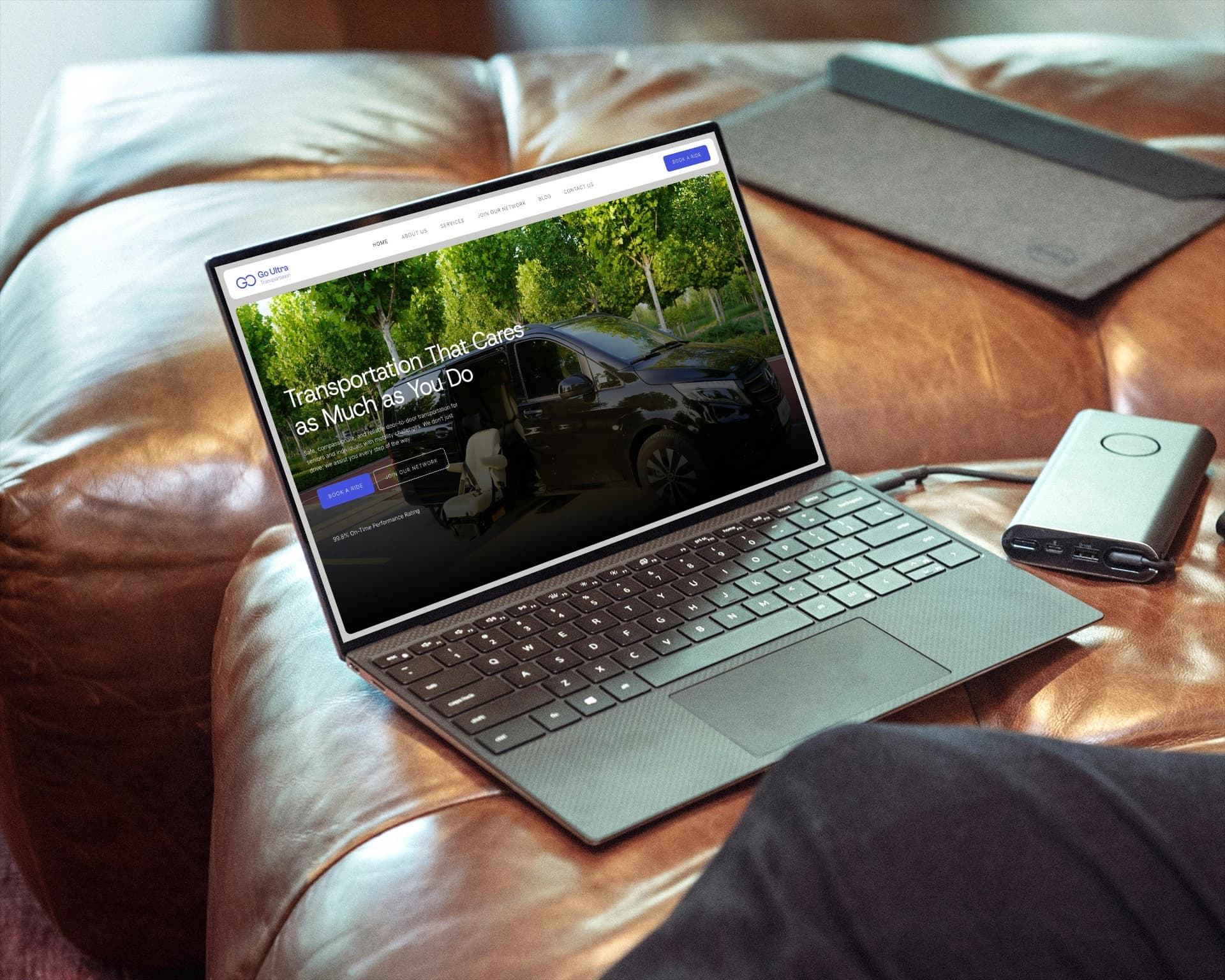
A credentialing-ready website with your service area, fleet, licensing details, and a trip request form speeds up broker approval and starts pulling in direct facility and private-pay bookings from day one, instead of leaving you dependent on broker volume alone.
The California NEMT Market in Numbers
What you're working with before you file your first document.
Residents across California that Medi-Cal NEMT and NMT benefits could route to your fleet.
ModivCare, Veyo, and Access2Care compete for trip volume across most California counties.
What most single-vehicle wheelchair van operators spend to get their first vehicle on the road.
Business registration through broker credentialing, when the parallel tracks are run correctly.
Per-occurrence commercial auto coverage most California brokers require before they'll credential you.
Typical Medi-Cal provider enrollment processing time for a complete, error-free application.
Licensing, Vehicles, Software, Brokers & Marketing in California
California splits non-emergency transportation into two distinct Medi-Cal benefit categories, and knowing which one fits your fleet matters for both enrollment and vehicle requirements. NEMT covers members who need medical monitoring or hands-on assistance during the ride, typically a wheelchair van, litter van, or ambulance. NMT (non-medical transportation) covers ambulatory members who simply have no other way to reach a covered service, usually via common carrier, taxi, or private vehicle.
Most new operators start on the NEMT side, since wheelchair van demand is steadier and it pays more per trip. Your Medi-Cal NEMT enrollment application should spell out which category you're applying under, because that choice determines exactly which vehicle and driver documentation DHCS will ask you for.
DHCS works through provider enrollment applications on a rolling basis, and incomplete submissions are by far the biggest cause of delay. Pull your entity documents, NPI, vehicle registration, insurance certificates, and driver files together into one package before you submit, rather than trickling them in as DHCS requests each piece.
California vehicle compliance for medical transport runs more layers than most states, and it's where new operators lose the most time. Vehicles used to transport passengers for hire generally fall under California Highway Patrol's authority for terminal inspections and safety compliance under the Basic Inspection of Terminals (BIT) program. Ambulance-level vehicles pick up an extra layer of oversight from the California Emergency Medical Services Authority (EMSA).
Separately, non-ambulance vehicles for hire, including a lot of wheelchair vans, can fall under California Public Utilities Commission charter-party carrier rules, which mean a TCP permit unless your specific contract structure is exempt. Whether you actually need one depends on your vehicle class and how you're contracted with a broker or county plan, so call CPUC and your target broker before you purchase, since fixing a vehicle to match the rules after you've already bought it costs far more than getting it right the first time.
Some counties stack their own vehicle inspection or driver registration rules on top of the state requirements, usually as a condition of their managed care plan contracts. Check with your county's Medi-Cal managed care plan administrator early so a surprise county rule doesn't derail a vehicle you've already bought.
Commercial auto liability isn't optional, and the limits are set by whoever you're contracting with, not the state alone. Most California brokers and managed care plans require at least $1,000,000 per occurrence for commercial auto liability, with some asking for higher total limits depending on vehicle type. Wheelchair vans and gurney vans generally carry higher premiums than standard ambulatory sedans, since the equipment and the risk are both greater.
General liability coverage protects against non-auto incidents, a fall during a transfer, for example, and it's commonly required alongside auto coverage. Workers' compensation insurance becomes required under California law the moment you bring on your first employee driver; there's no small-fleet exception.
Nail down your target broker's exact limit requirements before you shop for quotes. Buying a policy below what ModivCare, Veyo, or Access2Care requires just means paying to upgrade it later, and that can leave you without coverage for a few days and restart parts of your credentialing review.
Every California NEMT operator needs dispatch software running before their first trip. This is the system that receives trip assignments from brokers, schedules and routes your drivers, and captures the GPS-timestamped pickup and drop-off data brokers use to confirm a trip actually happened before they pay you for it. Platforms like RouteGenie, MediRoutes, TripSpark, and RoutingBox are common picks among California operators, though the platform matters less than whether it supports GPS trip verification, a driver mobile app, and HIPAA-compliant handling of member data.
Broker credentialing reviewers often ask what dispatch system you're running and whether it can pull up GPS-verified trip logs on request. Walking into a broker application with that system already live, rather than a plan to sort it out later, is one of the fastest ways to move your California credentialing forward.
Treat this as a monthly cost, not a one-time purchase. Dispatch platforms typically bill per vehicle or per month, and the cost climbs with your fleet, so build it into what you charge per trip from the start instead of budgeting for it once and forgetting it.
California's Medi-Cal NEMT and NMT benefit is run through county-organized managed care plans (think L.A. Care, Health Net, Molina, Anthem Blue Cross, and others depending on your county), and those plans hand off trip dispatch to transportation brokers. ModivCare, Veyo, and Access2Care operate the largest broker networks across the state, though which ones are actually active where you are depends on your county.
Start by figuring out which managed care plan or plans serve your county, then find out which broker each one uses for dispatch, and apply to all of them at the same time. Each broker relationship is its own independent pool of trip volume, so having more than one gives you a cushion if any single broker's volume dips.
The credentialing packages that clear fastest include a complete DHCS enrollment confirmation, current insurance certificates naming the broker as an additional insured, vehicle registration and inspection documents, and a complete file for every driver. Missing paperwork is, by a wide margin, the most common reason a California credentialing application stalls for weeks.
A professional website is more than a formality here. The people who review your broker application check for one while they're getting you set up, and it's the main channel private-pay families, discharge planners, and dialysis centers use to find a provider when they aren't waiting on a broker to hand them one. At minimum, your site needs a service area page for every county you cover, a fleet showcase, your insurance and licensing details, and a mobile-first trip request form, since most of these searches happen on a phone. We build broker-ready NEMT websites to this exact standard for California operators.
Claim and verify your Google Business Profile the same week your business gets registered. List it under Non-Emergency Medical Transportation Service, add every California county or city you actually serve as a service area, upload real photos of your vehicles and drivers, and start collecting reviews from your earliest riders. This is the listing that surfaces in the Google Maps local pack when a case manager searches "wheelchair transport near me" or a family searches "stretcher transport" in your service area.
Local SEO builds on that foundation over time: city-specific keywords like "wheelchair transport Sacramento" or "non-emergency medical transportation Los Angeles," a business name, address, and phone number that stays identical across every directory and broker portal, and citations layered on top of a site that's already fast and mobile-first. Operators who invest in local SEO and branding early tend to pull in private-pay bookings, paying 2 to 4 times broker rates, while their credentialing is still working its way through the system.

Ready to launch your California NEMT business?
We build broker-ready websites and marketing systems for California NEMT operators from day one, so you're pulling in private pay and facility bookings while your credentialing is still processing.
3 Mistakes That Slow Down California Operators
The most common, and most avoidable, delays new operators run into.
New operators often buy a wheelchair van first, only to discover afterward that it needs a CPUC charter-party permit or a CHP terminal inspection they never budgeted time for. Lock down your exact vehicle class requirements before you buy.
Missing insurance certificates or vehicle documents send your Medi-Cal enrollment application straight back into the review queue. A complete package on the first pass is the single biggest lever you have over your own timeline.
Every broker sets its own liability minimums. A policy that falls short of what ModivCare, Veyo, or Access2Care requires just means paying to upgrade it later, and that upgrade can leave a gap in coverage that restarts parts of your credentialing review.
What It Costs and How Long It Takes in California
LLC formation & CA Secretary of State filing fees
$70 – $800
Vehicle (used wheelchair van)
$25,000 – $55,000
Vehicle (used ambulatory sedan/minivan)
$8,000 – $20,000
Commercial auto insurance (annual, wheelchair van)
$5,000 – $9,000
General liability & workers' comp (annual)
$1,500 – $4,000
Driver background check, TB test, CPR/First Aid per driver
$300 – $600
NEMT dispatch software (monthly, per vehicle)
$100 – $300 / mo
Website and branding
$999 – $3,000
Business registration, EIN, NPI
1 – 3 weeks
DHCS Medi-Cal provider enrollment
6 – 16 weeks
Vehicle acquisition, CHP/CPUC compliance
2 – 6 weeks (parallel)
Driver hiring and credentialing
2 – 4 weeks (parallel)
Broker/managed care plan credentialing
2 – 6 weeks per broker
Total, start to first trip
Typically 3 – 6 months
Who Should Start an NEMT Business in California?
Whether you're filing your first LLC or adding a second vehicle to an existing fleet, the path through Medi-Cal enrollment and broker credentialing looks different depending on where you're starting from.
First-Time Operators
Never run a transport business before? Knock out the LLC, NPI, and DHCS enrollment steps first. Vehicle compliance, insurance, and driver hiring can all move in parallel while that application is in review.
Broker-Only Providers Going Private Pay
Already credentialed with a broker but tired of their per-trip rates? A broker-ready website paired with direct facility outreach is how you start winning private-pay trips at 2 to 4 times the rate.
Multi-Vehicle Fleet Operators
Scaling past your first vehicle? Revisit your insurance limits and CPUC/CHP compliance for every vehicle class you add, since the requirements can shift depending on what kind of vehicle you're bringing on.
Frequently asked questions
How much does it cost to start an NEMT business in California?
Do I need a California NEMT license to start my business?
How long does Medi-Cal NEMT enrollment take in California?
Which NEMT brokers operate in California?
Do I need a CPUC permit to operate a wheelchair van in California?
Can I start an NEMT business in California with one vehicle?
Do I need a website before I apply to brokers?
Do I need Google Business Profile and SEO to get NEMT clients in California?
What NEMT dispatch software do I need in California?
NEMT Marketing Resources
Deep dives into the strategies that help medical transport providers scale.
Article
Learn the exact strategy we use to help NEMT providers dominate local search and stop relying on broker volume.
Article
Digital credentialing is getting harder. Here is the checklist you need to pass MTM and Modivcare verification.
Article
We break down why shifting just 20% of your volume to private pay can double your net profit and improve your margins.