Author

Published
April 4, 2026
Reading time
6 min read
Content
Your Broker Relationship Does Not Replace a Website
What Brokers Actually Check Before Prioritizing You
The Real Risk of Broker Dependency
What "No Fancy Website" Actually Means in Practice
What a Website Actually Does for Your Business
The Operators Who Figured This Out Early
Where to Start if Your Website Is Outdated or Missing
Blog post categories
Need a Digital Partner?
Access a dedicated team of NEMT designers and developers. We handle your tech, branding, and growth so you can focus on your mission.
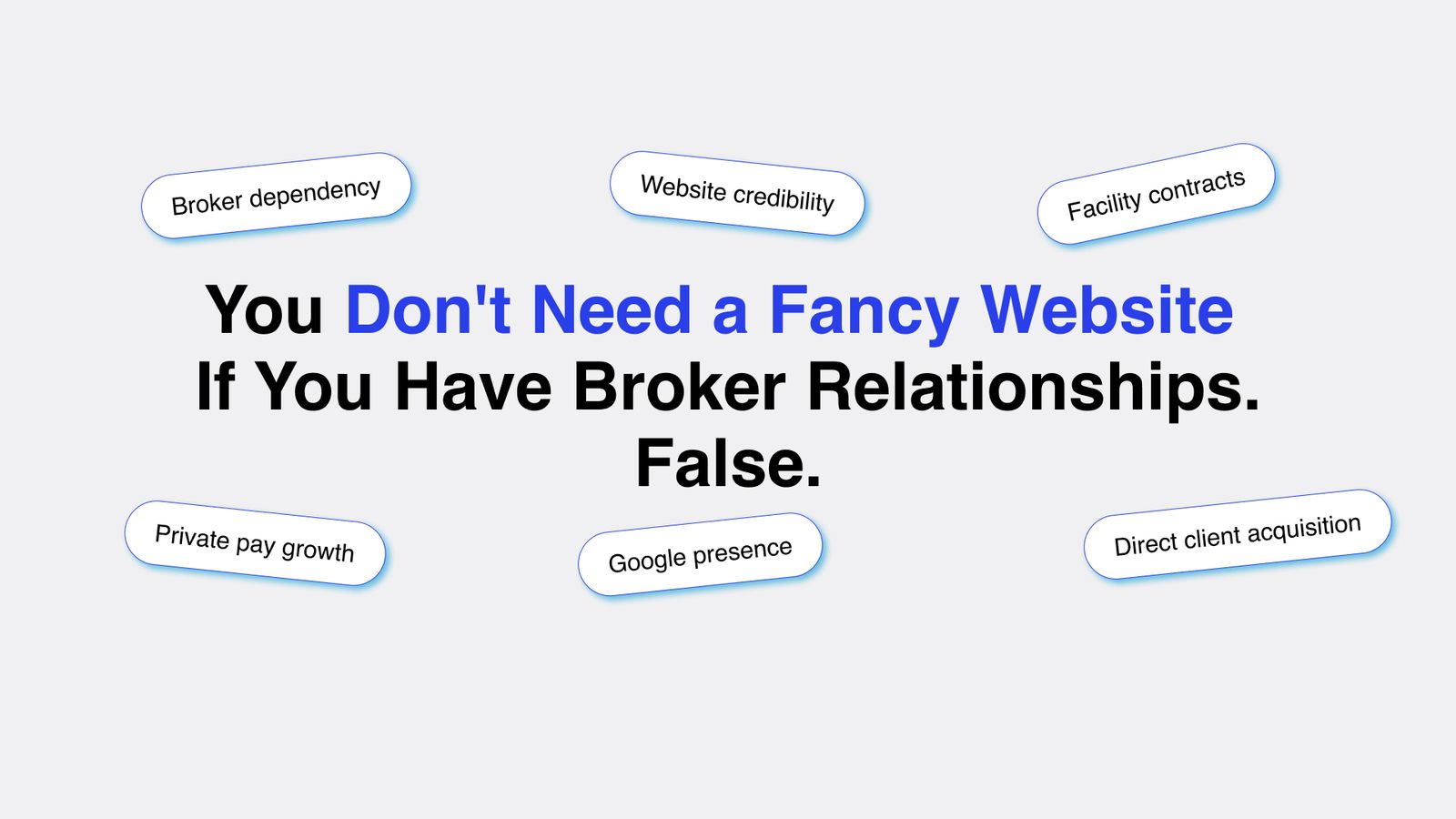
See How It WorksYou Don't Need a Fancy Website If You Have Broker Relationships. False.
This is one of the most repeated beliefs in the NEMT industry. Operators who have been working with MTM, Modivcare, or Veyo for years often say the same thing: "My brokers keep me busy. Why would I need a website?"
It sounds reasonable. But it is wrong, and it is costing operators real money every month.
A broker relationship is not a growth strategy. It is a starting point. The operators who stay dependent on brokers indefinitely are the ones who never build anything they actually own.
Your Broker Relationship Does Not Replace a Website
Brokers send you trips based on availability, geography, and price. They do not send you facility contracts. They do not send you private pay clients. They do not build your reputation in your local market.
Every one of those revenue streams requires someone to find you, evaluate you, and decide you are worth calling. That decision happens online before it ever happens on the phone.
A facility coordinator at a dialysis center managing 40 weekly transports will search for providers. A discharge planner at a hospital will look you up before they hand your number to a patient. A patient's family member will Google "medical transportation near me" and call whoever shows up first.
If you have no website, or a website that looks like it was built in 2011 and never updated, you lose those calls before they happen.
What Brokers Actually Check Before Prioritizing You
Here is something most operators find out too late. Broker network coordinators check your online presence when they are deciding which providers to prioritize for higher-value trips.
A provider with a professional website, active Google Business Profile, and real client reviews signals reliability. A provider with nothing online signals risk.
This is not about appearances. It is about trust. When a broker coordinator is deciding who to assign a complex trip to, they will pick the provider that looks established. Your website is part of that picture.
If you want to understand exactly how brokers evaluate providers online, read this: How Do NEMT Brokers Find Providers Online and What Most Operators Get Wrong.
The Real Risk of Broker Dependency
Operators who rely on brokers for 80% or more of their revenue are one policy change away from a serious problem.
Medicaid reimbursement rates get cut. Brokers add new providers to their network and your trip volume drops. A broker consolidates their vendor list and removes smaller operators. These things happen regularly, and when they do, operators with no direct client relationships have nothing to fall back on.

Your Website Is Either Winning Clients or Losing Them
We build NEMT websites that get found, build trust, and turn visitors into booked clients.
The operators who survive those shifts are the ones who built a second and third revenue channel alongside broker work. Private pay clients and facility contracts do not come from broker portals. They come from your website, your Google presence, and your reputation in the local market.
Read more on why broker dependency is a risk: Why Your NEMT Business Needs More Than Just a Facebook Page.
What "No Fancy Website" Actually Means in Practice
When operators say they do not need a website, they usually mean one of two things. Either they have a basic page with a phone number and nothing else, or they have nothing at all and are relying on a Facebook page or a Google Business Profile listing.
Neither of those works for facility outreach. A hospital discharge coordinator will not refer patients to a provider whose only online presence is a Facebook page. A senior living facility will not add you to their preferred vendor list if they cannot find basic information about your vehicles, your coverage area, or your credentials.
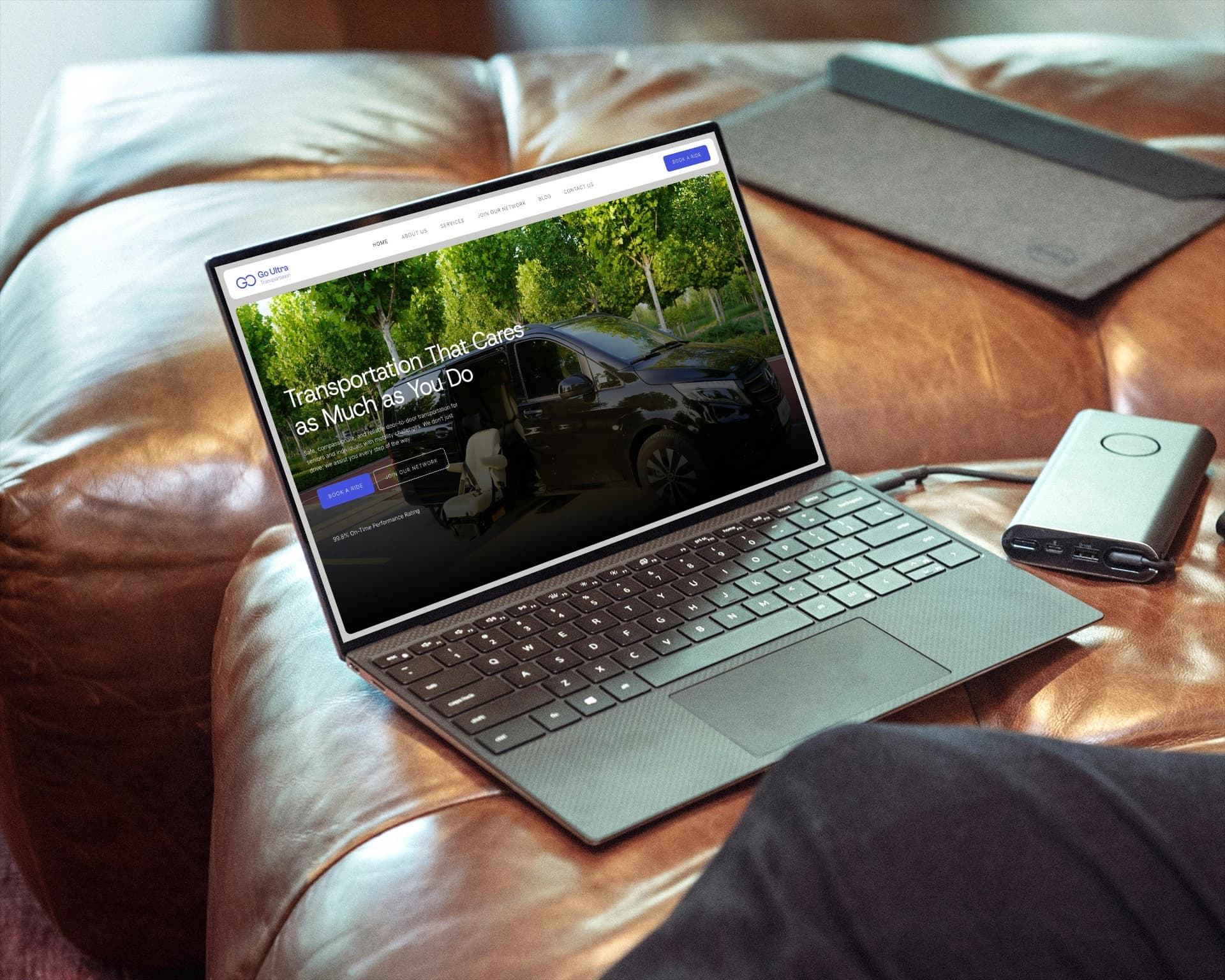
You do not need a website with custom animations or a $10,000 design budget. You need a website that answers five questions clearly: What do you do, who do you serve, where do you operate, how do you book, and why should someone trust you.
That is it. Five questions. A clean, functional site that answers those questions will outperform a beautiful site that answers none of them.
For a full breakdown of what your NEMT website needs to include, start here: NEMT Website Must-Haves: What Every Provider Needs to Get Bookings.
What a Website Actually Does for Your Business
A working website does four things that a broker relationship cannot.
First, it makes you findable by patients, families, and facility staff who are searching right now. Organic search traffic costs nothing once you rank.
Second, it gives facility coordinators something to evaluate before they call you. A one-page provider overview on your site can replace 10 cold calls.
Third, it supports your Google Business Profile. Google ranks local businesses higher when their website is active and relevant to the searches people are making. Your profile and your website work together.
Fourth, it builds credibility over time. Every review, every piece of content, every updated service page adds to the picture of a legitimate, reliable operation.
None of that happens with a broker portal login.
For a detailed look at what separates NEMT websites that generate bookings from those that do not, read the full guide: NEMT Website Must-Haves: The 2026 Provider's Guide to Getting More Bookings.
The Operators Who Figured This Out Early
The NEMT operators running 8, 10, or 15 vehicles did not get there by waiting for broker assignments. They built a web presence early, got their Google Business Profile active, reached out directly to facilities, and treated their website as a sales tool.
Their broker volume did not go away. It stayed, and they added private pay and facility revenue on top of it. That is how you grow without being at the mercy of reimbursement rate decisions made by people who have never met you.
If you want to see exactly how to win those facility contracts, this post covers the process step by step: How to Win High-Value Facilities Contracts for Your NEMT Business.
Where to Start if Your Website Is Outdated or Missing
You do not need to overhaul everything at once. Start with the pages that matter most.
Your homepage needs to state clearly what you do, what cities or counties you serve, and how to contact you. Your services page needs to list your vehicle types and the kinds of trips you handle. Your contact page needs a form, a phone number, and a response time commitment.
Add a Google Business Profile if you do not have one. Fill it out completely. Upload real photos of your vehicles. Ask your three most reliable clients to leave a review this week.
That is a functional starting point. It is not a full website build. But it is enough to start showing up, start getting found, and start having conversations with facility coordinators who would otherwise never call you.
If you want help building something that actually generates clients for your NEMT business, book a free strategy call: https://www.medflowdigital.com/book-demo.
Related Blogposts
Continue reading more insights from our medical marketing experts.
NEMT Websites
Everything you need to know about NEMT websites: best tools, cost, features, SEO, booking setup, and where to hire a specialist. Complete guide for providers.
NEMT Websites
NEMT website costs in 2026 range from $300 to $10,000+. See what operators actually pay across every option and what a properly built site should include.
Marketing & Design Newsletter
Subscribe to our newsletter and get cutting-edge marketing strategies, design inspiration, and exclusive tips delivered straight to your inbox.